
Understanding the Plastic Problem: One Nanoplastic at a Time
University
Georgia State University
Presenter
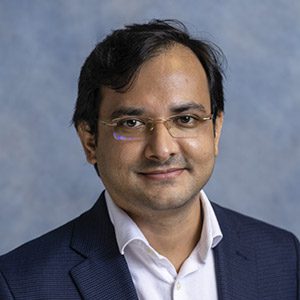
Dr. Chayan Dutta
Abstract: Plastic nanoparticles (PNPs) pose significant environmental and health concerns due to their potential adverse effects on biological systems. Understanding nanoscale interactions of PNPs is critical, particularly regarding how PNPs impact membrane properties and protein stability. The small size and high surface-to-volume ratio of PNPs facilitate interactions with lipid membranes, leading to structural modifications and long-term accumulation within membranes, ultimately resulting in functional changes. Also, theoretical predictions suggest that PNPs can disrupt the secondary structure of proteins through partial or complete denaturation. Such irreversible changes in protein structures are detrimental to the function of the native proteins. Despite theoretical predictions, direct experimental evidence remains limited. My group's current research is focused on understanding these nanoscale effects using various high-resolution optical microscopy and spectroscopy techniques. I will discuss our recent efforts to understand transport dynamics and interactions of PNPs with biomimetic lipid surfaces, including 1-palmitoyl-2-oleoyl-sn-glycero-3-phosphocholine (POPC) and ganglioside GM1-POPC membranes, using single-particle tracking (SPT) and super-resolution diffusion analysis (fcsSOFI). Our results show that charged PNPs exhibit salt-dependent transport behavior, with increased confinement in higher ionic environments. Cholesterol in membranes slows surface diffusion, and phase-separated domains in GM1-POPC membranes introduce diffusion heterogeneity. Additionally, we investigate PNP-peptide interactions using circular dichroism (CD) spectroscopy and single-molecule Förster resonance energy transfer (smFRET), revealing that PNPs induce structural alterations in peptides, affecting both α-helix and β-sheet conformations. These findings provide critical insights into the nanoscale interactions of PNPs with lipid membranes and proteins, highlighting their potential biological impacts.
Bio: Dr. Chayan Dutta is an Assistant Professor in the Department of Chemistry at Georgia State University, with affiliations at the Center for Diagnostics & Therapeutics (CDT) and the Brains & Behavior center at the Department of Neuroscience. He received his PhD in Chemistry from the University of Southern California in 2017, advised by Prof. Alexander Benderskii, where he worked on understanding hydrogen bonding at interfaces using nonlinear spectroscopy. He carried out his postdoctoral research at Rice University with Prof. Christy Landes, working on various superresolution and single-particle techniques. His lab focuses on exploring nanoscale surface effects using single particle methods and surface sensitive spectroscopy. Chayan has been awarded the American Chemical Society Petroleum Research (ACS PRF) Fund Doctoral New Investigator (DNI) Award in 2023, selected as a Scialog Fellow for Neurobiology in the Changing Ecosystem (NCE) by the Research Corporation for Science Advancement, and received the 2025 Scialog Collaborative Innovation Award.
Please join us for a reception at 3:00 p.m. in Hand 1135. The seminar will start at 3:30 p.m. in Hand 1144.