
Harnessing the Power of (Bio)chemistry for Sustainable Material Innovation
University
Oak Ridge National Laboratory
Presenter
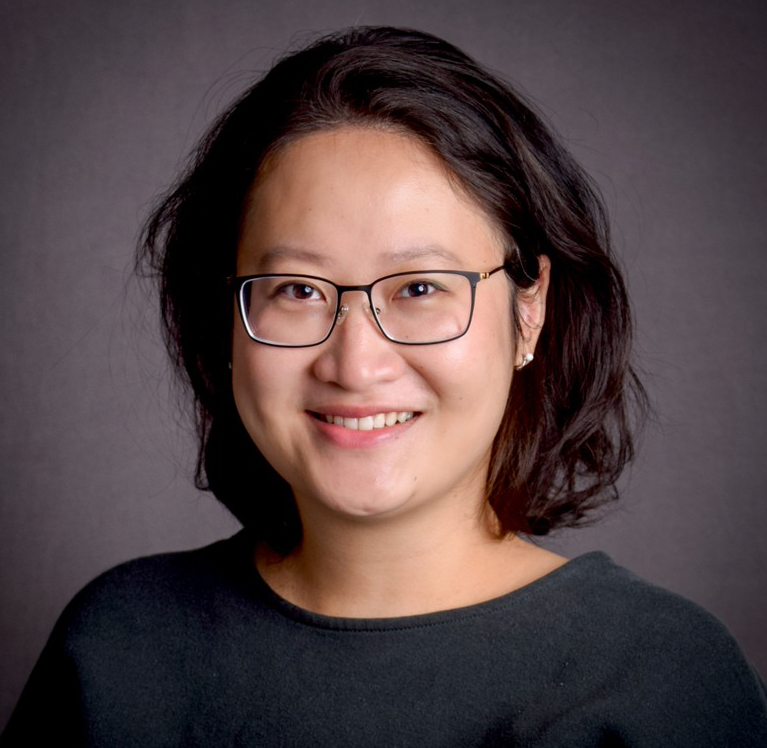
Dr. Yue Yuan
Abstract: The urgent need for sustainable materials and processes is catalyzing innovation at the intersection of soft matter science, green chemistry, and biotechnology. In this seminar, I will present our research on sustainable soft matter systems, emphasizing bioderived nanomaterials and biocatalysis-enabled synthesis. We begin by sharing my earlier research on how polymer surface chemistry, in combination with nanoscale structuring, governs functional interactions with biological molecules—enabling applications such as anti-fouling surfaces, controlled drug release, and biocatalytic reactors for industrial use. I will also share insights on the use of neutron scattering techniques to understand material behavior at the molecular level, including a biodeuteration case that enhances contrast in neutron studies of complex biomolecular assemblies, supporting the fundamental understanding of nanocomposites made from biological building blocks. We explore how the intrinsic properties of natural nanopolysaccharides influence their function as reinforcing agents in polymeric hydrogels. Remarkably, the chemical composition and morphology of mycelium vary across species, resulting in significant differences in reinforcement performance. The second part of the talk will cover ongoing work on biocatalytic synthesis of aliphatic polyesters via lactone ring-opening polymerization. This approach offers mild, selective, and solvent-efficient routes to polymer formation. The microstructures of resulting block copolymers can be tuned through enzyme selectivity, yielding materials with distinct physical properties. Together, these approaches offer a blueprint for designing next-generation materials with reduced environmental impact and tunable functionality through chemistry and biochemistry tools. This talk will be particularly relevant to students interested in polymer science, green chemistry, biomaterials, and interdisciplinary research that bridges fundamental chemistry with real-world sustainability challenges.
Bio: Dr. Yue Yuan joined Oak Ridge National Laboratory (ORNL) as an Alvin M. Weinberg Distinguished Staff Fellow in 2022, working at the Center for Nanophase Materials Sciences (CNMS). She currently leads two projects focused on sustainable synthesis and materials. One project explores how the charge and hydrophobicity of bio-derived macromolecules influence their reassembly during material processing—such as fiber formation—and their interactions with other macromolecules, using neutron scattering techniques. The other is a biocatalysis project that leverages high-throughput tools in protein engineering to enable low-energy, selective chemical synthesis. In addition, she contributes to numerous collaborative research efforts involving surface functionalization of nanomaterials, materials characterization, and method development. Dr. Yuan earned her Ph.D. in Fiber and Polymer Science, with a graduate minor in Biochemistry, from North Carolina State University in 2021. Her dissertation research focused on low-energy carbon capture using enzymes and aqueous solvents, as well as elucidating mechanisms of enhanced catalysis at liquid–gas–solid interfaces. Her work includes the first reported biosynthetic production of deuterium-labeled chitosan from filamentous fungi. While pursuing her M.S. in Textile Science at Kansas State University, Dr. Yuan conducted research at the Nanotechnology Innovation Center of Kansas State (NICKS), focusing on manipulating surface wettability by altering fiber morphology and nanoscale chemistry. Prior to joining ORNL with this prestigious fellowship, she worked as an innovation analyst in the chemical and manufacturing sectors at RTI International, a nonprofit research institute in North Carolina.
Please join us for a reception at 3:00 p.m. in Hand 1135. The seminar will start at 3:30 p.m. in Hand 1144.