
Engineering Proteins for Sustainable Amination Chemistry
University
Nanyang Technological University
Presenter
Dr. Anuvab Das
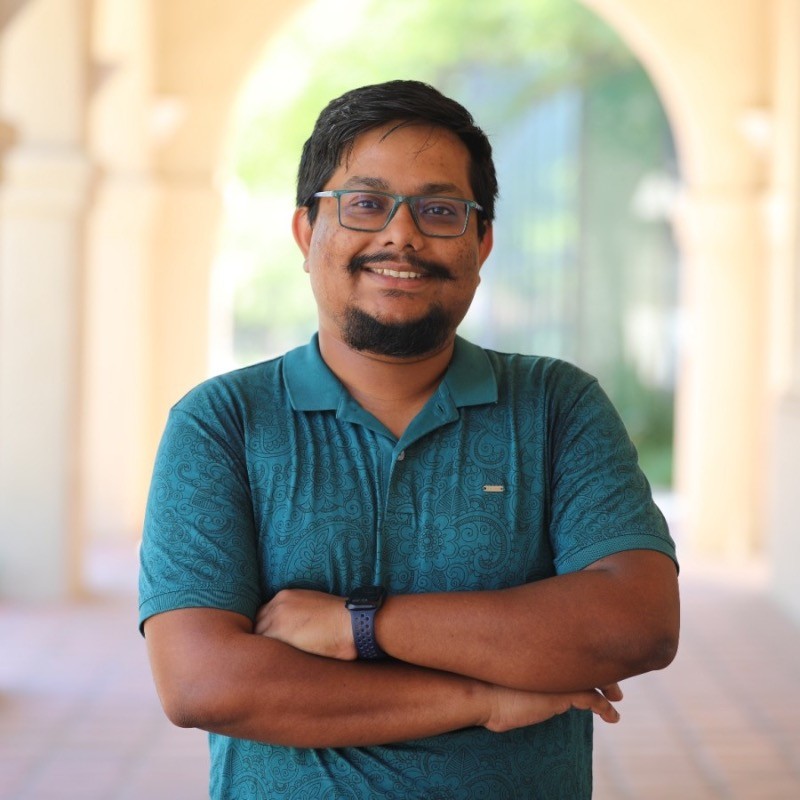
Bio: Anuvab is currently an Assistant Professor in the School of Chemistry, Chemical Engineering, and Biotechnology at Nanyang Technological University (NTU). He obtained his B.Sc. from Presidency College (2013) and his M.Sc. from IIT Kharagpur (2015), before earning his Ph.D. at Texas A&M University (2020) with Prof. David Powers, where he studied transient intermediates in catalysis using in situ crystallography. He then joined Prof. Frances Arnold’s group at Caltech as a postdoctoral scholar, where he developed new-to-nature amination reactions through protein engineering. Since starting his lab at NTU in 2025, his group has focused on developing sustainable synthetic methods through biocatalysis and uncovering their underlying mechanisms.
Abstract: Enzymes are powerful tools for sustainable chemical synthesis. For instance, engineered hemoproteins can selectively incorporate nitrogen from nitrene precursors such as hydroxylamine, O-substituted hydroxylamines, and organic azides into organic molecules. In this talk, we will explore how the principles of protein evolution can be leveraged to harness these transient nitrene intermediates for catalytic processes that do not occur naturally. The engineering of heme proteins enables the selective functionalization of inert C–H bonds, generating nitrogen-containing molecules from basic feedstock chemicals. I will also discuss the discovery of a novel enzymatic C–H amination reaction, guided by the spectroscopic characterization of a key reaction intermediate. These insights open up new opportunities for the development of biocatalysts in sustainable amination chemistry.